

Training Hard vs. Competing: Why Your First BJJ Tournament Feels Different
You train several days a week. You roll hard. You have rounds with people who are bigger, stronger, faster, and more experienced than you
So you should be ready to compete, right?
Yes—and no.
One of the biggest surprises for someone entering their first Brazilian Jiu Jitsu competition is discovering just how different a tournament match feels from even a hard round inside their home academy.
The techniques are the same. The rules are mostly familiar. You may even be facing someone with roughly the same experience level.
But the intensity is different.
And that is exactly why competition can be such a valuable part of your Jiu Jitsu development.
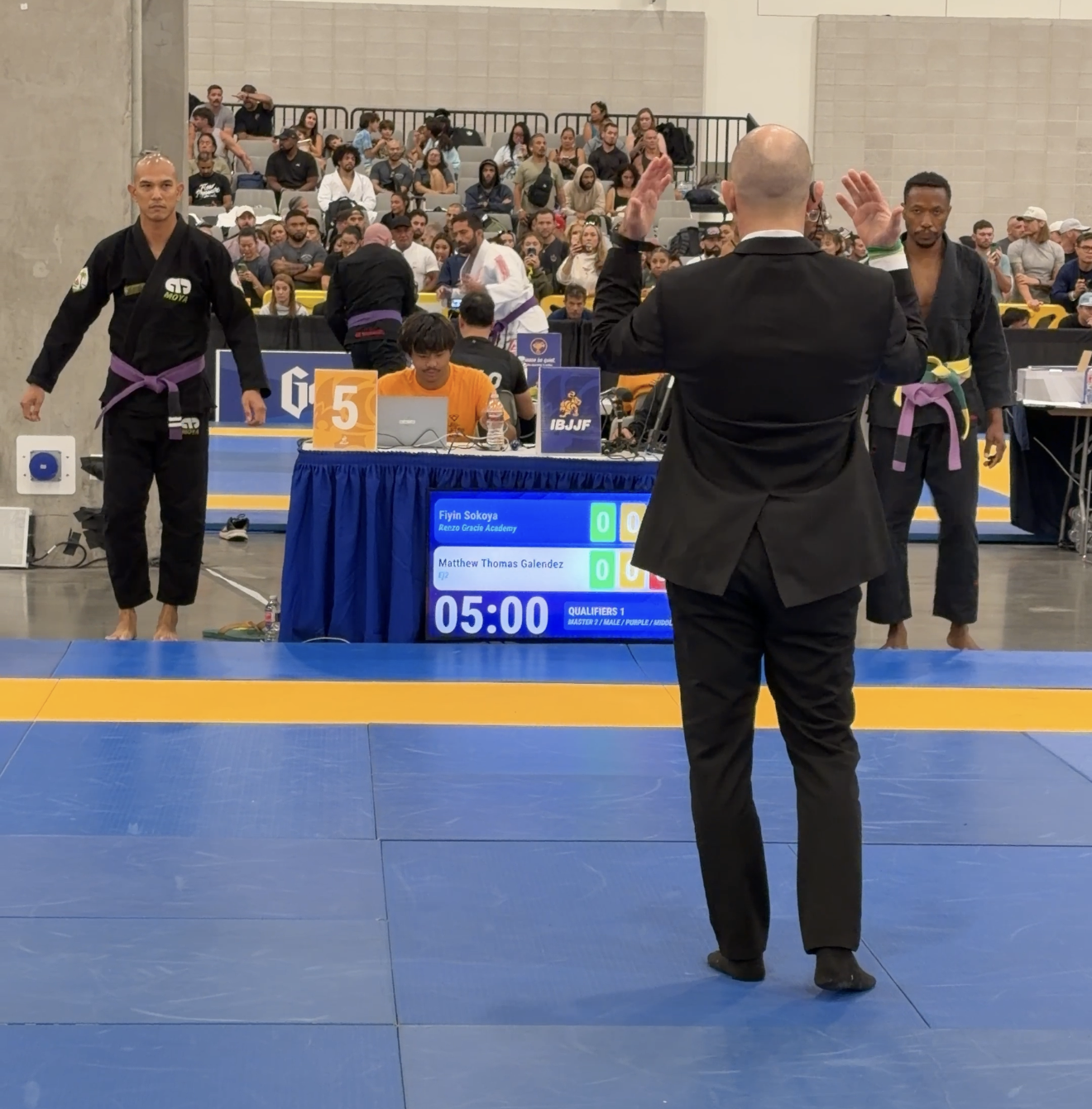
Your Training Partners Aren't Really Strangers
Think about someone you roll with every week.
Eventually, you know things about their game without consciously thinking about them. You know who likes to wrestle. You know who immediately pulls guard. You know whose pressure is miserable. You know who hunts triangles, who loves leg locks, and who absolutely refuses to let you have an underhook.
More importantly, you trust them.
You may roll incredibly hard together, but underneath that intensity is an understanding: we're training together.
You're trying to make each other better.
Competition removes a lot of that familiarity.
You shake hands with someone you may have never met before, the referee starts the match, and suddenly you have to solve a completely unfamiliar problem in real time.
That's one of the first lessons competition teaches you.
The First 30 Seconds Can Feel Like a Different Sport
Ask someone about their first BJJ tournament, and there's a good chance they'll mention the adrenaline.
Your heart rate jumps.
Your grip feels different.
You may hold your breath without realizing it.
Techniques you've performed hundreds of times suddenly become harder to remember.
And your opponent isn't giving you a comfortable second to figure things out.
They're trying to establish their game before you establish yours.
This is why simply telling someone to "roll harder" isn't always enough preparation for competition.
Competition training needs to expose athletes to pressure, pace, scoring, starting from the feet, boundaries, referees, time management, and decision-making while tired.
The goal isn't to turn every normal training session into a tournament.
It's to become comfortable operating when the intensity increases.
Live Rolling Builds Your Jiu Jitsu. Competition Tests It
Regular live training is where most of your Jiu Jitsu gets built.
You experiment.
You try techniques you're not very good at yet.
You get caught.
You tap.
You ask your partner what happened.
Then you try again.
Competition changes the equation because you don't get an immediate second attempt.
If you make a mistake and your opponent capitalizes on it, the match may be over.
That pressure exposes things normal training sometimes hides.
Can you execute your takedown when somebody is fighting just as hard to impose theirs?
Can you escape when you're exhausted?
Do you understand the score?
Can you stay calm when you're behind?
Can you make good decisions with a minute left?
Most importantly: can you still think when everything gets chaotic?
That's one reason competition fits so naturally with what we believe at Elevate Jiu Jitsu Academy:
Confidence in Chaos.
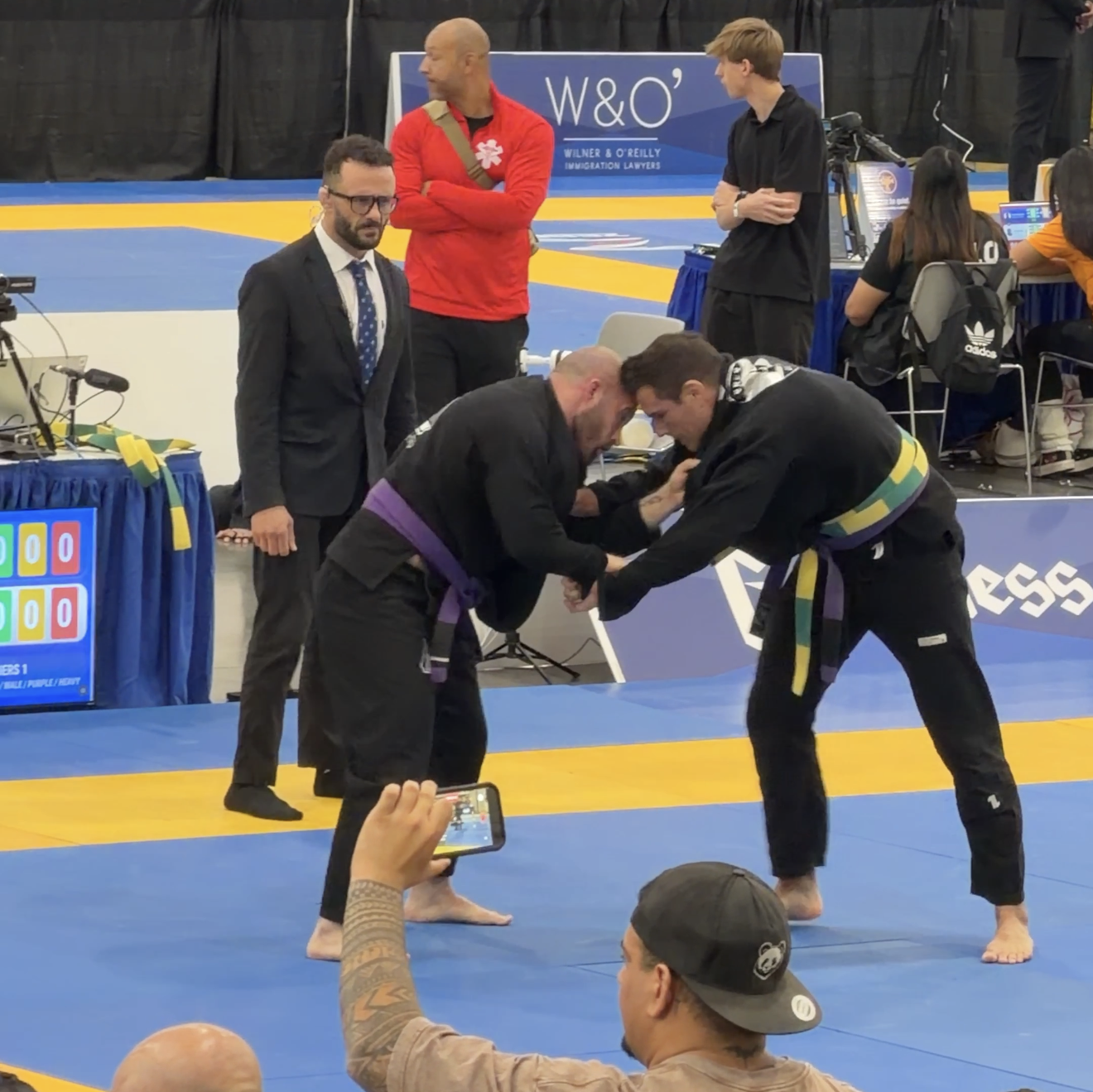
Your First Tournament Isn't the World Championships
This is another important conversation, especially for first-time competitors.
Not every Jiu Jitsu tournament is the same.
A local or regional BJJ tournament is an excellent place to begin. You'll experience the nerves, preparation, unfamiliar opponents and intensity of competition without pretending you're stepping onto the mat at the highest level of the sport.
As you progress, the competitive environment can change dramatically.
Larger tournaments may bring deeper brackets, more experienced competitors, stricter procedures, more sophisticated strategy, and athletes who have structured significant portions of their training around competition.
At major IBJJF events, athletes also need to understand formal rules, uniform requirements, weigh-ins, bullpen procedures, and tournament operations in addition to preparing technically and physically.
And an event such as the IBJJF World Jiu-Jitsu Championship represents an entirely different competitive standard.
Your first local tournament doesn't need to feel like Worlds.
It shouldn't.
Competition is a skill too, and skills develop through experience.
Start Local. Learn. Adjust. Go Again.
For someone competing for the first time, success shouldn't be measured only by the medal around your neck.
Did you manage your nerves?
Did you remember your game plan?
Were you able to breathe?
Did you understand where you were in the match?
Did something fall apart that immediately showed you what you need to work on?
Those answers can be worth more to your development than a podium photo.
Your first competition establishes a baseline.
Then you return to the academy.
You train.
You fix the holes.
You become more comfortable with the intensity.
And eventually, you compete again.
That's how a competitor develops.
Competition Can Make Your Everyday Jiu Jitsu Better
You absolutely do not have to compete to get the benefits of Brazilian Jiu Jitsu.
Plenty of people will train their entire lives without entering a tournament, and there is nothing wrong with that.
But for people who are curious about competition, stepping onto that mat can reveal things about your Jiu Jitsu that are difficult to discover anywhere else.
Competition creates a very simple question:
Can you apply what you've learned when the environment changes?
The opponent is unfamiliar.
The intensity increases.
People are watching.
There's a referee standing next to you.
There's a scoreboard.
There's a clock.
And there's no familiar training partner quietly giving you room to work through the position.
That's pressure.
Learning to remain composed inside that pressure is part of becoming a better grappler.
Preparing for Your First BJJ Competition in Grand Junction
At Elevate Jiu Jitsu Academy in Grand Junction, Colorado, we want competitors to experience that intensity before tournament day.
That means competition preparation isn't only about learning more techniques.
It's about learning how to compete.
Starting from the feet.
Understanding points and advantages.
Developing a reliable opening sequence.
Learning when to attack and when to protect a lead.
Practicing competition-paced rounds.
Getting comfortable with coaches giving instructions from the edge of the mat.
And learning how to control your breathing and decision-making when adrenaline takes over.
Our goal isn't to make every student a competitor.
It's to make sure that students who choose to compete aren't surprised by what competition feels like.
You Don't Have to Be "Ready"
One of the biggest mistakes first-time competitors make is waiting until they feel completely ready.
You probably won't.
Your first tournament is part of becoming ready.
You might win.
You might lose.
You might discover that you absolutely love competing.
You might decide once was enough.
All of those outcomes are okay.
Because the real value is experiencing a version of Jiu Jitsu that you can't completely recreate inside your own academy.
Training builds the tools.
Competition introduces the chaos.
And learning how to confidently operate inside that chaos?
That's where things get interesting.
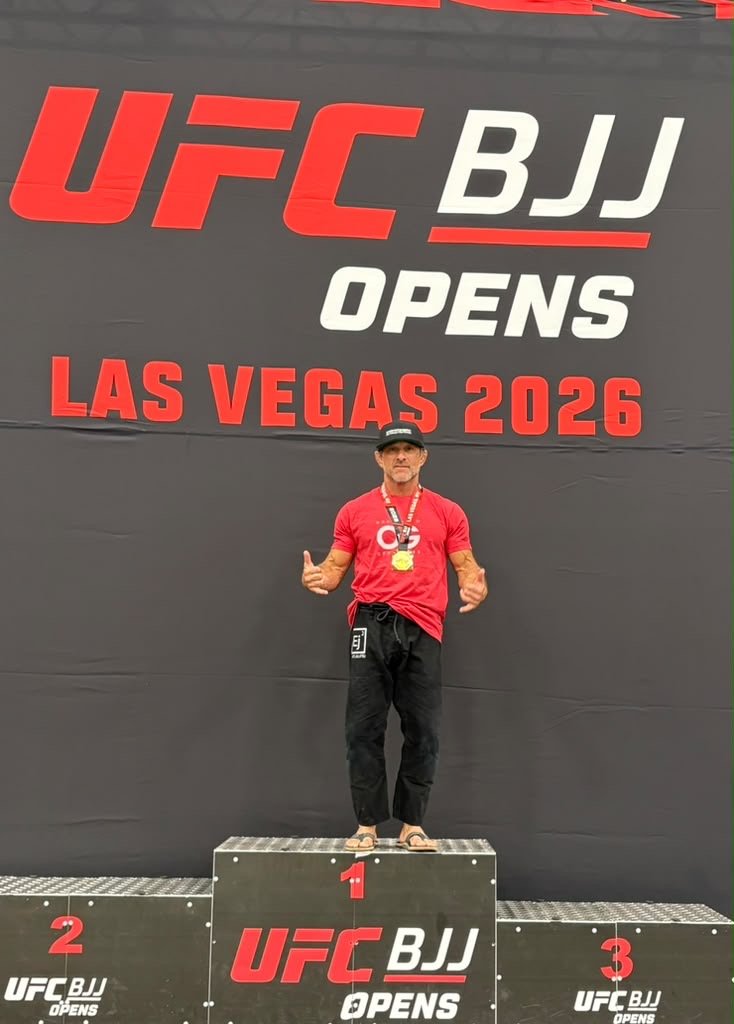
Coach Joel taking home the GOLD at UFC BJJ OPEN in Phoenix, AZ.
Interested in Competition Jiu Jitsu in Grand Junction?
Elevate Jiu Jitsu Academy offers Brazilian Jiu Jitsu training for beginners, recreational students, and competitors in Grand Junction and across Colorado's Western Slope.
If you're thinking about entering your first BJJ tournament—or you're an experienced competitor looking for a team to help prepare you—come train with us.
Train hard. Test yourself. Learn from it. Elevate.